
From Rural Crossroads to Suburban Hub: The History of Olney, Maryland (20832)
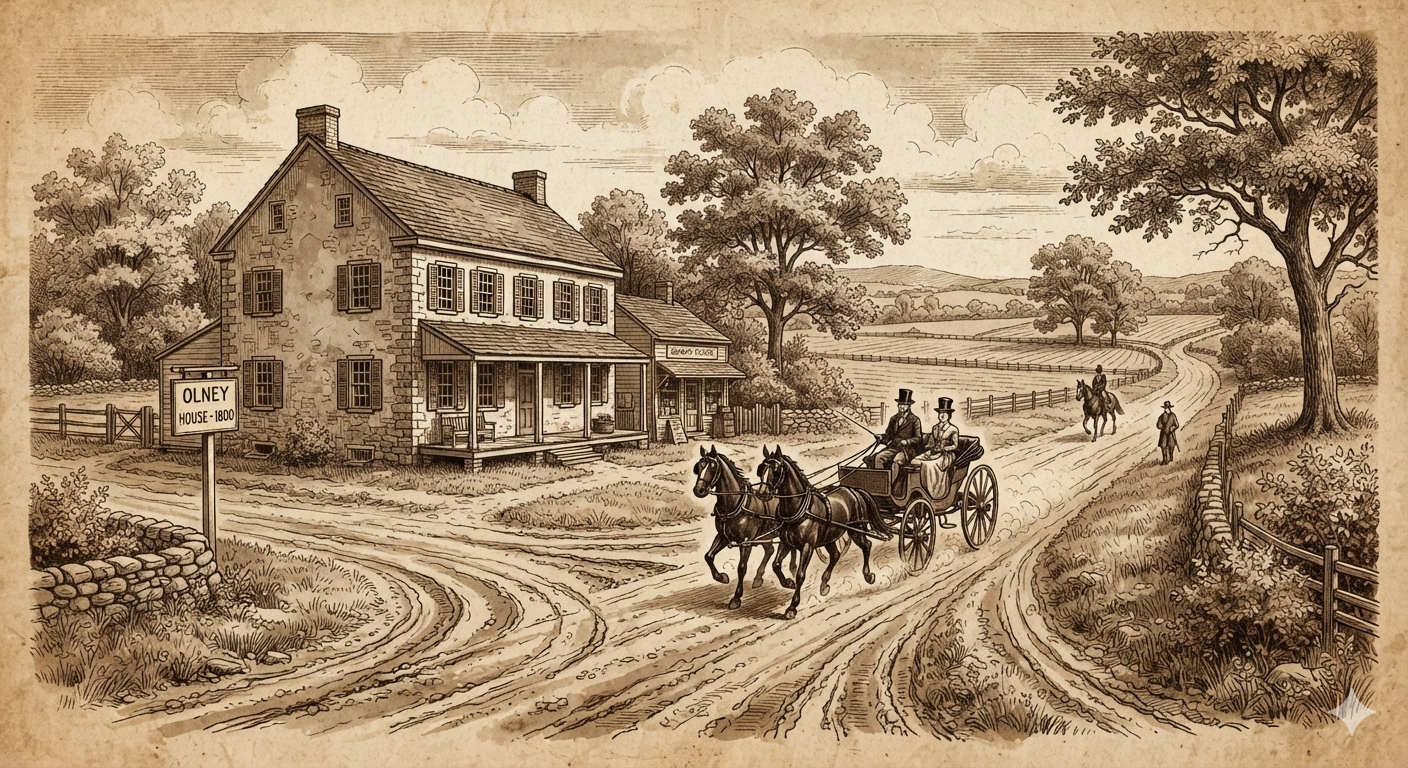
After posting the previous articles on this blog and on LinkedIn about Olney, MD, some of my readers asked me to write about the rich history of the town where I live, so here it is.
When exploring Olney MD real estate, homebuyers are instantly drawn to its tree-lined subdivisions, many schools, and bustling commercial core. Yet, beneath this vibrant modern community lies a deep historic legacy. Long before ZIP code 20832 became one of Montgomery County's most desirable suburban destinations, it was a quiet agricultural village defined by Quaker heritage, colonial turnpikes, and historic crossroads.
Understanding the history of Olney, Maryland offers a fascinating look at how a 19th-century farming hamlet evolved into a top-rated place to live in the Washington, D.C. metropolitan area.
1. Colonial Beginnings: From Land Grants to "Fair Hill"
The story of Olney began in 1720, when King George II of England issued a massive 2,550-acre land grant in central Montgomery County. By 1763, colonial planter Richard Brooke secured land patents in the area, establishing an estate known as Fair Hill.
During the late 1700s, Quaker families settled throughout the neighboring Sandy Spring corridor. These early settlers established a strong agricultural foundation focused on farming, community, and education. A small crossroads village quickly developed where two crucial trade routes intersected: the road connecting Rockville to Baltimore (Route 108) and the route connecting Washington to Westminster (Georgia Avenue / Route 97).
2. How Mechanicsville Became "Olney"
By the early 1800s, the bustling village was called Mechanicsville, named after the local blacksmiths, wheelwrights, potters, and artisans operating at the crossroads.
Around 1800, a prominent local brick home known as the Olney House was constructed near the intersection. In 1837, Dr. Charles Farquhar and his wife Sarah Brooke Farquhar inherited the residence. Deep admirers of the English poet William Cowper, they named their estate after Cowper's hometown of Olney, England.
When Dr. Farquhar was appointed the local postmaster, the U.S. Postal Service established the official post office at his home, officially renaming the village from Mechanicsville to Olney in 1851. Today, that historic brick home still stands as a celebrated local landmark, home to the modern trattoria Salt & Vine.
3. Civil War Ties and Historic Replicas
During the mid-19th century, Olney sat directly along key military movement corridors. During the Civil War, both Union and Confederate troops marched through the village. In 1863, Confederate General J.E.B. Stuart led thousands of cavalrymen through Olney, raiding local farms for horses and provisions before heading north toward Gettysburg.
Olney was also surrounded by history-making neighbors. Just two miles north, the town of Brookeville served as "U.S. Capital for a Day" in August 1814 when President James Madison fled Washington, D.C., following the British invasion during the War of 1812.
Another historic milestone occurred right in Olney: in 1801, local resident Thomas Moore Jr. patented the country's first farm refrigerator at his Longwood estate, forever altering how food was preserved and transported across the nation.
4. Modern Growth and Olney MD Real Estate
Throughout the 1800s and early 1900s, Olney remained a quiet rural farming enclave with fewer than 100 residents. That changed in the mid-20th century with the expansion of public utilities, schools, and commuting routes.
Neighborhood developments began transforming farmland into single-family subdivisions like Olney Mill and Cherrywood, alongside townhome and condominium communities. Key institutions reinforced the town's regional importance:
-
Olney Theatre Center: Founded in 1938 as a summer playhouse, it grew into a premier professional theater venue.
-
Montgomery General Hospital (MedStar Health): Established in 1920, providing anchor healthcare services for the mid-county area.
-
Sherwood High School: Traceable back to the 1883 Quaker Sherwood Academy, evolving into the primary school cluster for much of Olney. Today, the Sherwood High School Warriors football team is a cornerstone of Friday night community pride in Olney, boasting a storied tradition of Maryland state championships and long-standing local rivalries..
Why Olney's History Matters to Homebuyers Today
Olney has managed to preserve its small-town historic character while providing modern suburban conveniences. The historic crossroads at Georgia Avenue and Route 108 remains the heart of the community.
Whether you are drawn by the rich historical roots, the excellent schools, or the convenience of the Intercounty Connector (ICC), understanding the history of Olney, Maryland in ZIP code 20832 illustrates why this community continues to retain long-term property values and exceptional quality of life.
Thinking about buying, selling, or simply curious about what your Olney home is worth in today’s market? Reach out to me today for a complimentary, hyper-local home equity analysis!
Categories
Recent Posts

Principal Premier Agent License ID: MD: 644396 | DC: SP40002306
+1(301) 525-7453 | bryan.kerrigan@redfin.com