
Montgomery County MD Radon Law: What Buyers and Sellers Need to Know About Radon Testing & Contingencies
Every homeowner has heard of radon, but do you know how it impacts buying or selling a home in Montgomery County, Maryland?
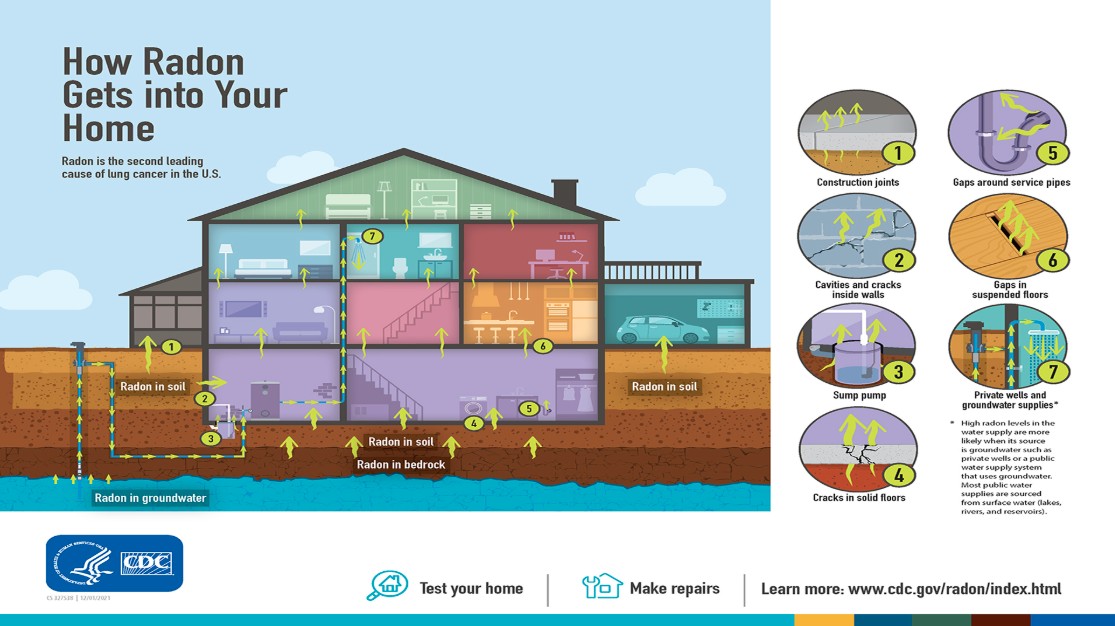
Radon is a naturally occurring, radioactive gas that is completely colorless and odorless. While present in trace amounts outdoors, it becomes a serious health risk when trapped inside structures after seeping through foundation cracks, sump pumps, and crawl spaces.
According to the U.S. Environmental Protection Agency (EPA), breathing elevated levels of radon over time is the second leading cause of lung cancer in the United States (second only to smoking), contributing to an estimated 21,000 deaths every year.
Because radon is an invisible threat, testing is the only way to know if a home has safe air levels. Here is how Montgomery County law protects homeowners, how the testing process works, and how the radon contingency plays out in real estate transactions.
What is the Montgomery County Radon Law?
Since October 2016, Montgomery County, Maryland has mandated a specific Radon Law for real estate sales. Under county regulation, nearly all single-family detached homes and townhomes being sold must undergo radon testing before closing.
Key Exceptions & Rules to Keep in Mind:
-
Condominiums are exempt: Because condos generally sit above ground level, individual unit owners are exempt from the testing requirement.
-
Cost and Testing Options: Testing can be done professionally by a certified inspector for around $100 to $150, or via a do-it-yourself test kit (which typically costs $50 to $75, including mail-in lab results).
-
Location: Higher indoor radon levels, defined by the EPA as 4.0 picocuries per liter (pCi/L) or higher, are most frequently detected in closed basements and lowest living levels.
However, several other property types, specific real estate transactions, and municipal jurisdictions are also legally exempt from the radon testing requirement:
1. Specific Types of Property Structures
-
Cooperatives (Co-ops): Like condos, cooperative units are exempt from mandatory seller testing.
-
Properties set for demolition or conversion: Homes sold with plans to be demolished by the buyer or converted into non-residential/commercial spaces do not require testing.
2. Specific Real Estate & Financial Transactions
The county waives the mandatory radon test for non-traditional residential sales, including:
-
Foreclosures & REOs: Transfers to a lender (or its affiliate) resulting from a foreclosure or deed in lieu of foreclosure.
-
Court-Ordered & Tax Sales: Sheriff’s sales, tax sales, sales by a court-appointed trustee, or partition sales.
-
Estate & Fiduciary Transfers: Transfers conducted by a fiduciary while administering a decedent’s estate, guardianship, conservatorship, or trust.
-
Tax-Exempt Transfers: Any transfer exempt from state or local transfer taxes under Maryland Tax-Property Code § 13-207 (such as certain family-member transfers).
3. Exempt Municipalities (Local Exclusions)
In Maryland, incorporated municipalities are exempt from county laws unless they specifically vote to adopt them ("municipal home rule").
Unless they have passed local ordinances to adopt Montgomery County's sales law, single-family homes and townhomes located inside the corporate town limits of the following municipalities are generally exempt from the county mandate:
-
Town of Kensington
-
Town of Poolesville
-
Town of Barnesville
How Does the Radon Contingency Work in a Home Sale?
When buying or selling a home in Montgomery County, the radon contingency in the sales contract protects both parties by establishing a clear plan if elevated gas levels are discovered.
Here is how the contingency process typically unfolds:
-
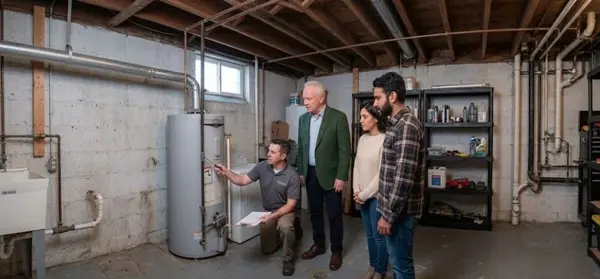
The Testing Window: After an offer is accepted, the buyer (or their licensed inspector) places a continuous radon monitor or passive test canister on the lowest livable level of the home—usually the basement—for 48 to 72 hours.
-
Reviewing Results: If the lab or monitor reports a reading below 4.0 pCi/L, the test passes, and the contingency is satisfied.
-
If Radon Levels Are High (4.0+ pCi/L): The buyer submits a formal Radon Inspection Contingency Notice requesting that the seller fix the issue before settlement.
-
Negotiating Mitigation: The seller can either agree to pay for a professional radon mitigation system installation prior to closing or offer a financial credit to the buyer at settlement.
Remediation: Fixing High Radon Levels
Finding high radon during a home sale might sound alarming, but it is actually one of the most straightforward and cost-effective home repairs to solve!
-
How Remediation Works: A certified radon technician installs an active soil depressurization system (a quiet, specialized fan and PVC pipe network) that pulls radon gas from underneath the foundation and safely vents it above the roofline. This increases air exchanges and prevents gas from entering the living space.
-
The Cost: Installing a standard radon mitigation system costs roughly $1,200 to $1500, making it a minor investment for long-term health and peace of mind.
Final Thoughts for Montgomery County Buyers & Sellers
Whether you're listing a property in Bethesda or searching for a home in Silver Spring, keeping the Montgomery County radon law top-of-mind ensures a smooth real estate transaction. Testing is fast, mitigation is affordable, and taking care of it protects your family's health for years to come.
Categories
Recent Posts






Principal Premier Agent License ID: MD: 644396 | DC: SP40002306
+1(301) 525-7453 | bryan.kerrigan@redfin.com