
The True Cost of Buying a Home in Maryland: Beyond the Purchase Price

When searching for a home in Maryland, it is easy to get caught up calculating monthly mortgage payments based on the listing price and interest rates. However, one of the biggest surprises for first-time buyers and out-of-state relocators is the sheer amount of cash needed at closing above the down payment.
To prevent surprises at the closing table, let's explore the hidden transaction costs, community obligations, and escrow requirements unique to buying residential real estate in the Old Line State.
1. Maryland Transfer and Recordation Taxes
Maryland has some of the highest transfer and recordation taxes in the nation. These government fees are charged whenever title to real property is transferred and recorded in county land records.
The total closing tax burden typically includes three parts:
-
State Transfer Tax: A flat 0.5% of the home’s purchase price.
-
County Transfer Tax: Varies by jurisdiction (e.g., 1.0% in Montgomery County, 1.4% in Prince George’s County, and 1.5% in Baltimore County).
-
Recordation Tax: A fee charged per $1,000 of purchase price that varies by county.
How the Costs Are Split
By standard Maryland contract custom, transfer taxes and recording fees are split 50/50 between the buyer and the seller. On a $500,000 home purchase in a county with a 1.0% transfer tax, the combined transfer taxes total $7,500. Under a standard 50/50 split, your share as a buyer would be $3,750—before accounting for county recordation fees.
The First-Time Maryland Homebuyer Exemption
If you are purchasing your very first principal residence in Maryland, you may qualify for a significant statutory discount. Under Maryland law:
-
The State Transfer Tax drops from 0.5% to 0.25%.
-
The seller is statutorily required to pay the entire 0.25% state portion.
-
The buyer’s 0.25% share of the state tax is completely waived.
Depending on the county, this statutory exemption can save first-time buyers thousands of dollars at closing!
2. Community Fees: HOA vs. Condo vs. Civic Associations
Not all neighborhood associations impact your monthly budget in the same way. When evaluating a property in Maryland, it is critical to understand the distinction between mandatory homeowners associations, condominium associations, and voluntary civic organizations.
-
Condo Associations ($300 – $700+ / month): High monthly fees that generally cover master building insurance, exterior building maintenance (roofing, siding), water/sewer, trash, and common amenities.
-
Full-Service HOAs ($70 – $200+ / month): Typically found in planned suburban developments. These fees cover common grounds, neighborhood entry features, playgrounds, and community centers or swimming pools.
-
Voluntary Civic Associations ($30 – $100 / year): Communities like Olney Mill in Brookeville/Olney operate under a voluntary civic association or low-dues HOA setup. Rather than funding massive shared facilities, these nominal annual dues (often ~$95/year) fund community signage, local events, newsletter communications, and advocacy for neighborhood interests.
Closing Tip: Beyond regular dues, watch out for upfront Capital Contributions or HOA Resale Packet fees. Many formal HOAs require new buyers to pay a one-time initiation fee equal to 1–2 months of dues at settlement.
3. Escrows: Property Taxes and Homeowners Insurance
Lenders do not just collect principal and interest each month; they also set up an escrow account to pay property taxes and hazard insurance on your behalf. At closing, you must seed this account with several months' worth of prepaid funds.
Property Tax Reserves
Maryland real estate property taxes are billed annually on July 1st for the fiscal year (July 1 – June 30). Depending on the month you close, title attorneys will prorate taxes between buyer and seller and collect 2 to 6 months of property taxes upfront to establish your lender's escrow buffer. In high-value regions like Montgomery or Howard County, setting up this initial tax reserve can easily require $2,000 to $5,000 in upfront cash.
Homeowners Insurance
Lenders require buyers to purchase a full 12-month homeowners insurance policy in advance prior to settlement, plus collect an additional 2 to 3 months of insurance payments to seed the escrow buffer.
4. Post-Closing Cash Reserves: Maintenance and Updates
Closing costs cover the transaction, but post-closing reserves keep your investment safe. Draining your checking account down to zero just to close on the deal is a major financial risk.
Financial advisors and real estate experts recommend keeping 1% to 3% of the home's purchase price in liquid savings post-closing for immediate costs, such as:
-
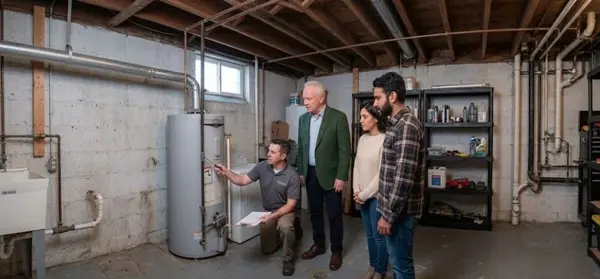
Urgent Deferred Maintenance: Addressing mechanical issues, aging water heaters, or sudden appliance failures.
-
Immediate Cosmetic & Moving Upgrades: Painting, floor refinishing, lock changes, window treatments, and moving fees.
-
Lender Reserve Requirements: Many loan programs (especially for multi-unit properties or higher loan balances) require buyers to prove they hold 2 to 6 months of total mortgage payments in reserve after closing costs are settled.
Planning Your Path Forward
Calculating your homebuying power involves much more than plugging a sale price into an online mortgage calculator. Between Maryland transfer taxes, upfront escrow reserves, title settlement fees, and association dues, plan on allocating 2% to 4% of the purchase price toward closing costs and prepaids.
Navigating these extra line items before making an offer ensures you walk into the settlement table confident, prepared, and free of costly surprises.
Categories
Recent Posts





Principal Premier Agent License ID: MD: 644396 | DC: SP40002306
+1(301) 525-7453 | bryan.kerrigan@redfin.com